

From 25–28 August 2026, Budapest hosted the 24th Congress of the European Anthropological Association (EAA), which celebrates its 50th anniversary this year. The international conference, organised primarily by the Department of Biological Anthropology at the Faculty of Science of Eötvös Loránd University (ELTE), featured a presentation by Anna Szécsényi-Nagy, Director of our institute, who was invited to share the preliminary results of her Momentum Bioarchaeology Research Project investigating the population of Roman Pannonia. Krisztián Kiss, a member of the research group, presented a poster on the anthropological and paleoradiological investigations of human remains from an archaeological site studied within the project.
At the conference, titled Science, Technology and Society – Fusions of Horizons in Anthropology, participants learned about the latest research findings through 72 oral presentations and 49 poster presentations, covering a wide range of topics, such as human evolution, bioarchaeology, genomics, growth and development, forensic anthropology, sports anthropology, and the application of artificial intelligence in research. The scientific programme also included presentations by six invited speakers.
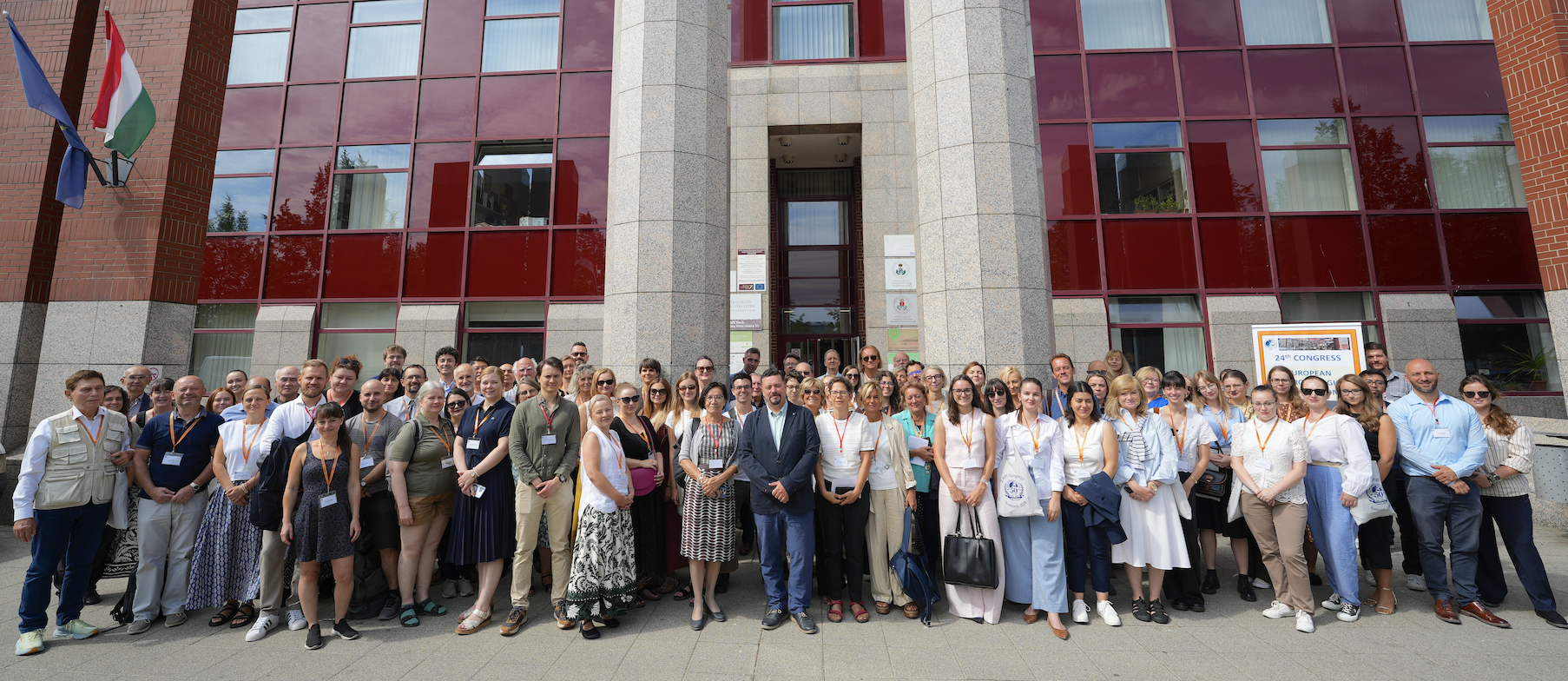 Photo: Department of Biological Anthropology, Faculty of Sciences, ELTE
In her plenary lecture on the opening day, archaeogeneticist Anna Szécsényi-Nagy, Director of the Institute of Archaeogenomics (ELTE RCH), presented the aims, methods and preliminary results of the MTA–ELTE HTK Momentum Bioarchaeology Research Project, which she has led since 2023. By integrating burial data, physical anthropology, isotope analyses, and archaeogenetics beyond the archaeological and epigraphic sources on which research has traditionally relied, the project applies a multiproxy bioarchaeological approach to investigate the population of the northeastern region of Roman Pannonia. The research group seeks to reconstruct mobility, biological relationships, lifestyle, social organization, and mortuary practices. The results of the archaeogenomic analyses to date highlight the complexity and dynamic changes in the demographic history of the Pannonian frontier zone. The title of her presentation is as follows:
- Anna Szécsényi-Nagy:
Life and death in Roman Pannonia: reconstructing diversity through multiproxy analyses
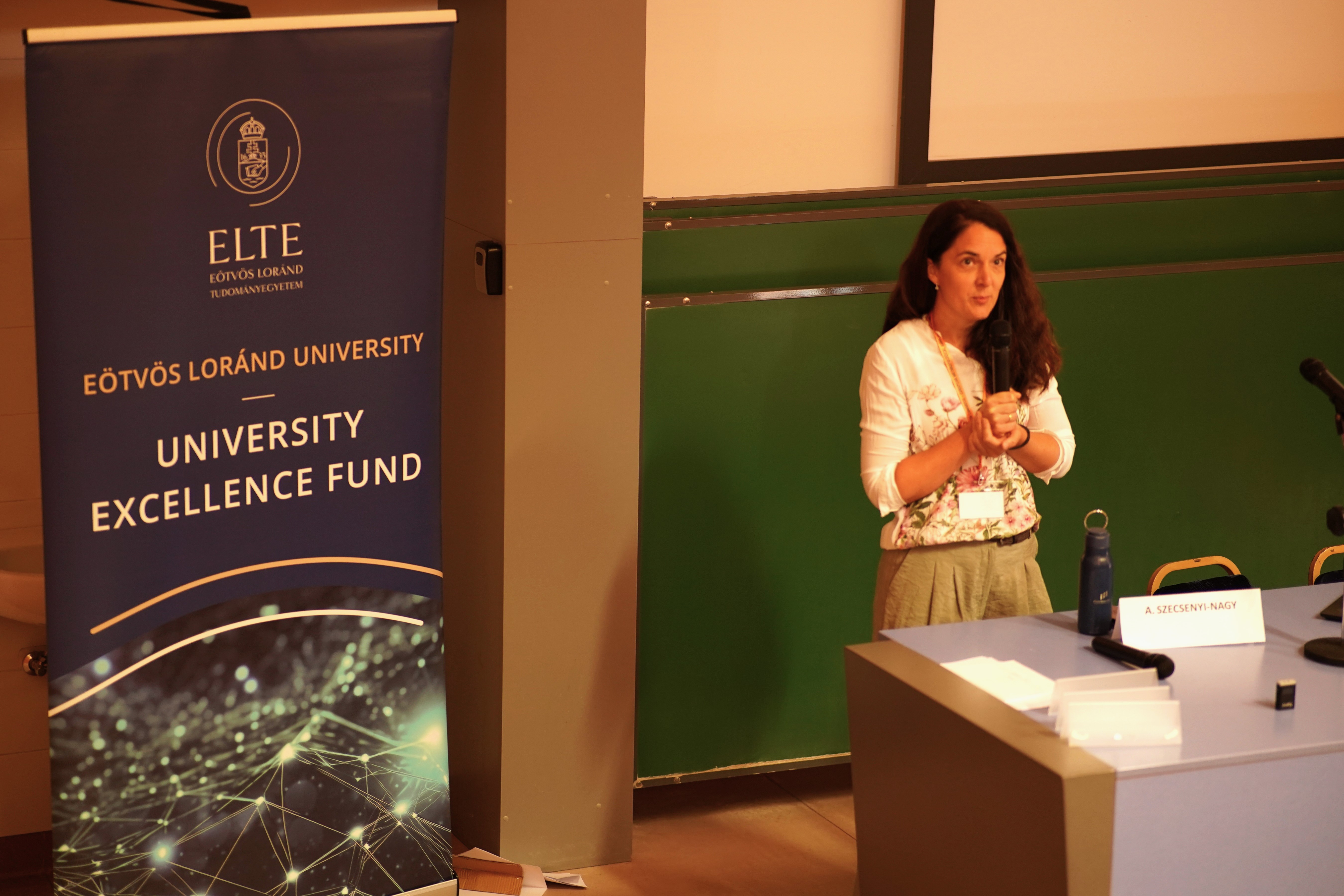 Photo: Department of Biological Anthropology, Faculty of Sciences, ELTE
Physical anthropologist Krisztián Kiss, Assistant Research Fellow at the Institute of Archaeogenomics, ELTE RCH and a member of the Momentum Bioarchaeology Research Group, presented a poster with his co-authors on the anthropological, paleopathological and paleoradiological investigation of human remains from grave groups excavated around the villa at the Csúcshegy–Harsánylejtő site in Aquincum. The study aimed to reconstruct the life histories and lifestyle of these 29 individuals, 14 of them buried in the Roman period, by analysing pathological alterations in their bones indicating stress exposure, as well as environmental and health-related challenges. The examples presented also demonstrated the advantages of applying photon-counting detector computed tomography (PCD-CT), an innovative technology in Hungarian bioarchaeological research. The PCD-CT images were produced in collaboration with the Medical Imaging Centre of Semmelweis University. The list of authors and the title of the poster are as follows:
- Krisztián Kiss, Anikó Kecskés, Taylor Danielle Mateyka, Orsolya Mateovics-László, Orsolya Láng, Ibolyka Dudás, Ádám Békésy-Szabó, Zsolt Bernert, Balázs Gusztáv Mende, Anna Szécsényi-Nagy:
Story of the villa estate: anthropological and paleoradiological investigation of Csucshegy-Harsanylejto (3rd-4th c. CE) from Pannonia
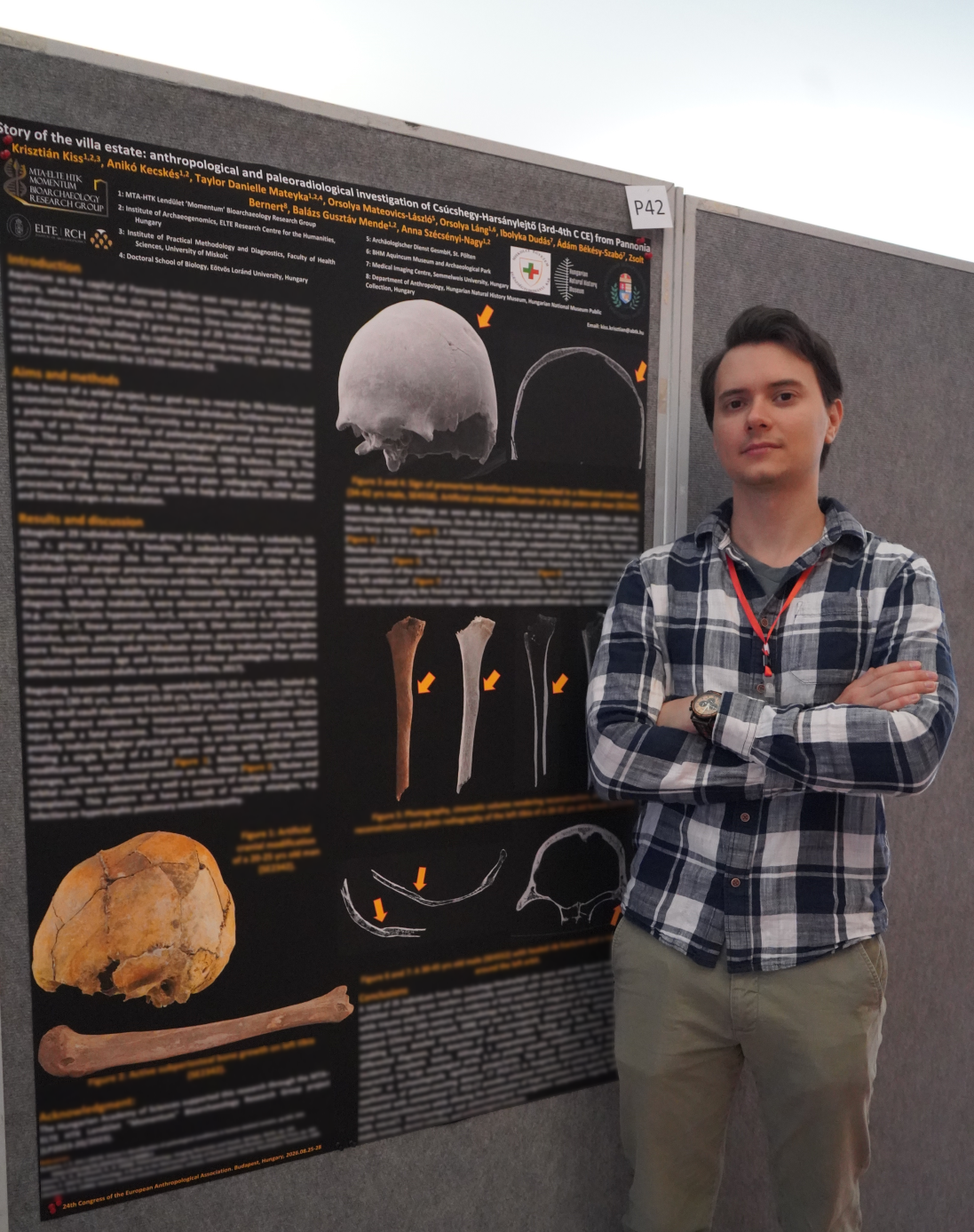 Photo: Department of Biological Anthropology, Faculty of Sciences, ELTE
The detailed programme of the conference is available on the event website, while the abstracts of all presentations can be found in the special issue of Anthropologiai Közlemények.

