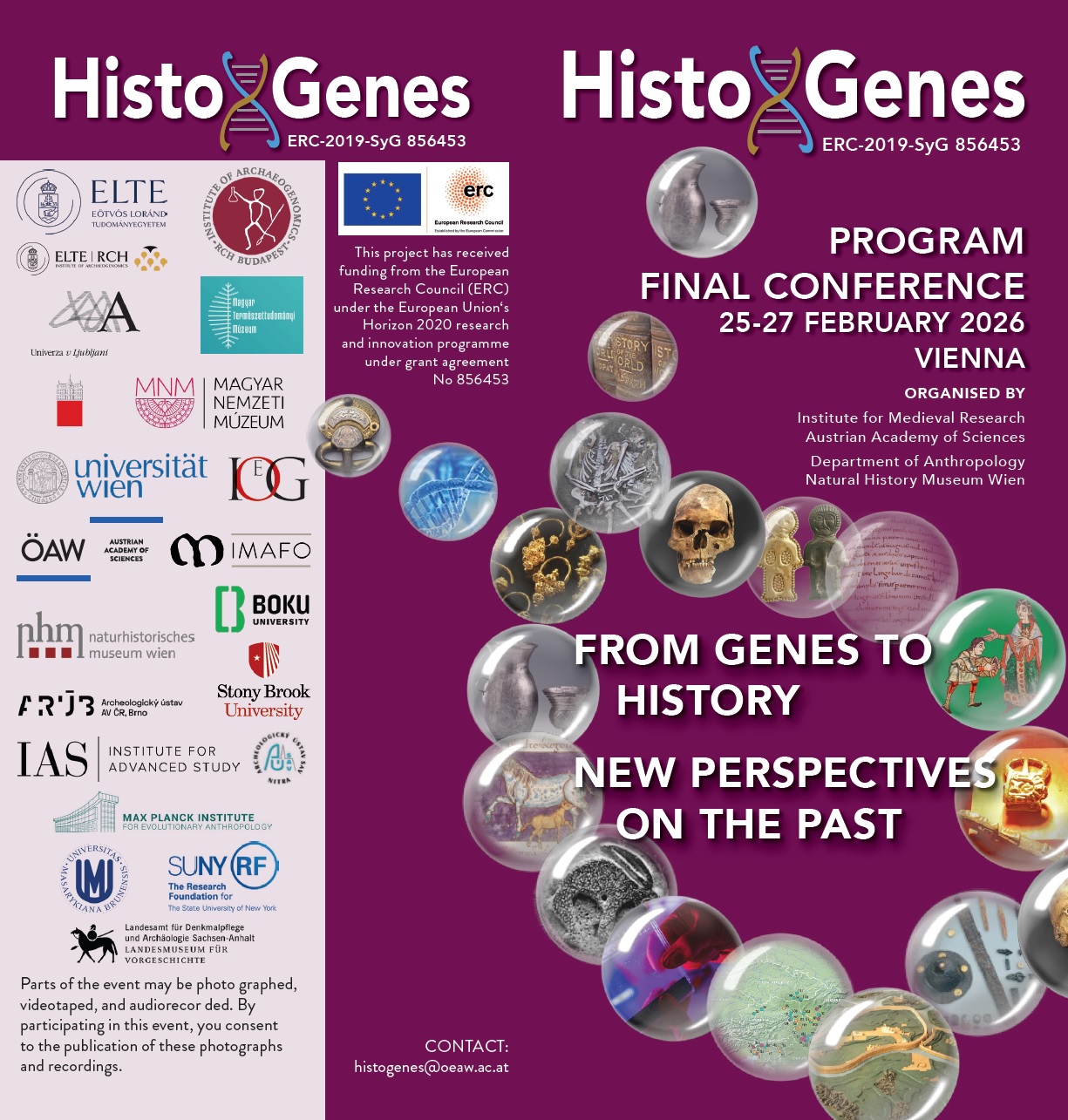
Launched in May 2020, the ambitious HistoGenes project set out to gain a deeper understanding of the population history of Eastern Central Europe after the fall of the Roman Empire, during the period of major migrations and early medieval political and cultural transformations (AD 400–900). By combining the most advanced methods of genetics, archaeology, anthropology, and history, the international research team aimed to shed new light on this transformative era. From February 25–27, 2026, participants gathered in Vienna for a final conference to discuss and present the most important findings of their work—concluding this year—and to explore possible future research perspectives.
Funded by the European Research Council through an ERC Synergy Grant, the six-year research program genetically analysed a total of 7,000 samples and carried out archaeological and anthropological studies of over 100 cemeteries. The team have also presented their discoveries in numerous publications and are working on further studies. As a beneficiary partner in the program, the Institute of Archaeogenomics is involved in DNA and isotope sampling, laboratory work, and the comprehensive examination of specific research topics through the end of 2026.
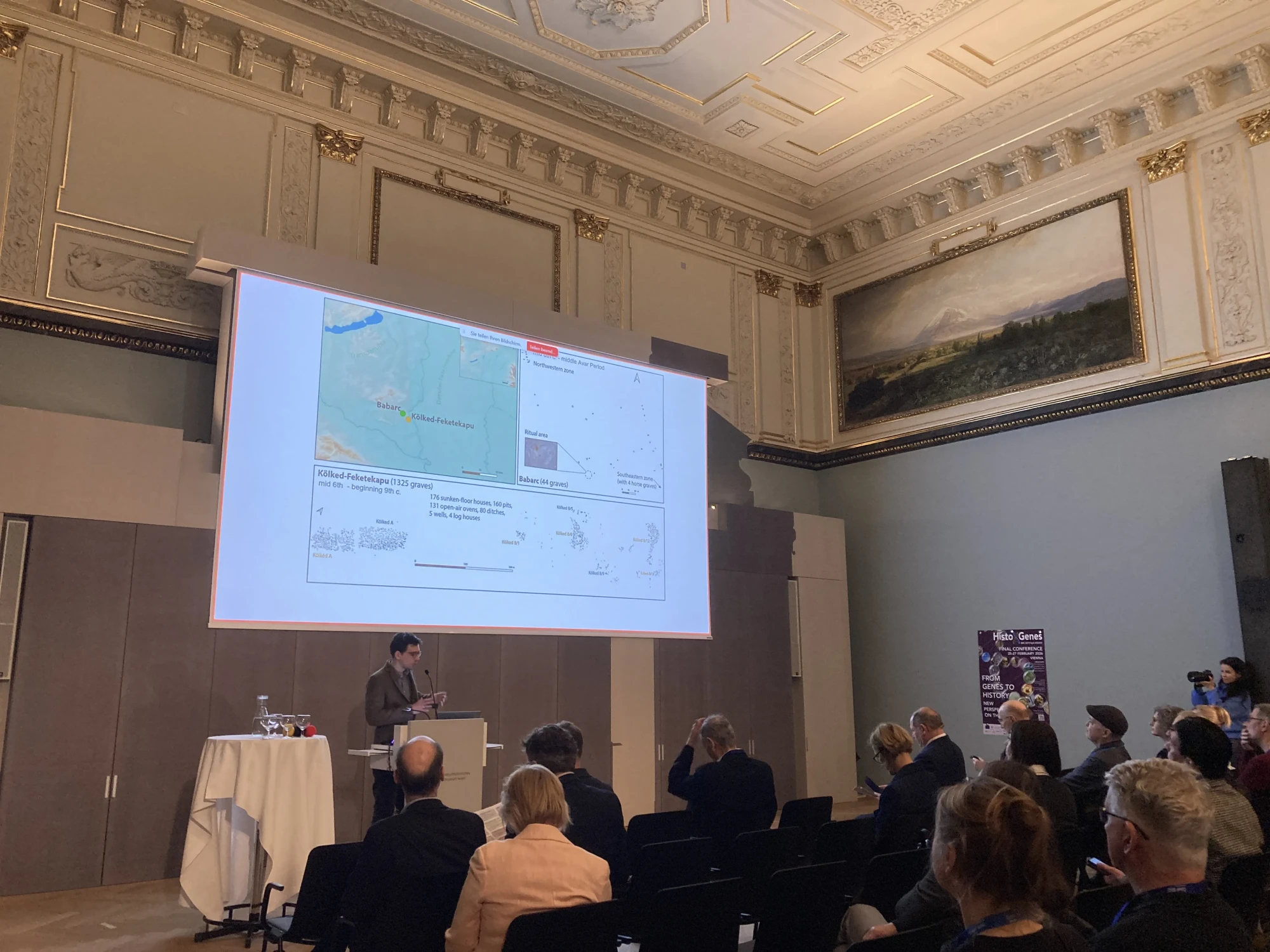
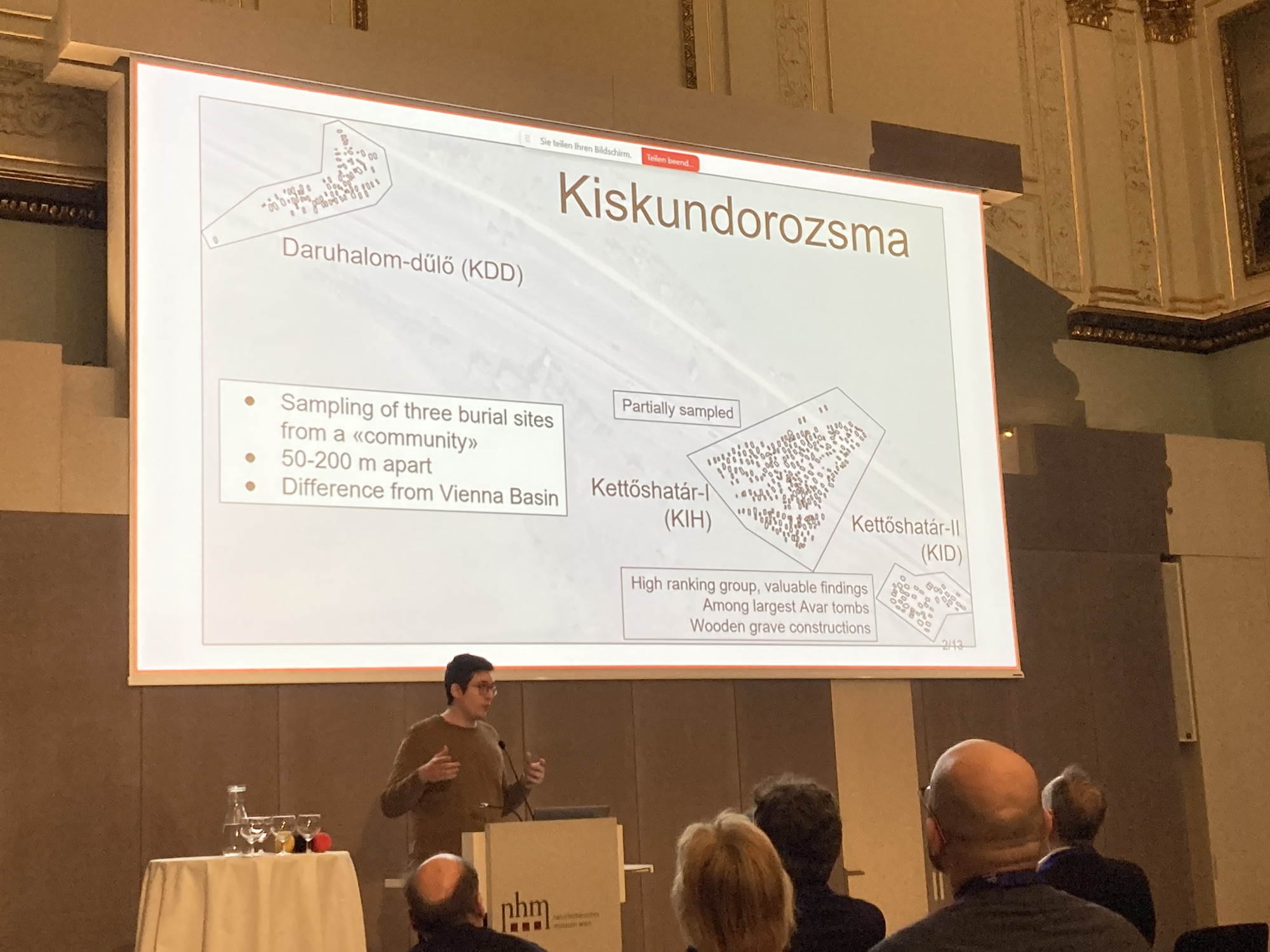
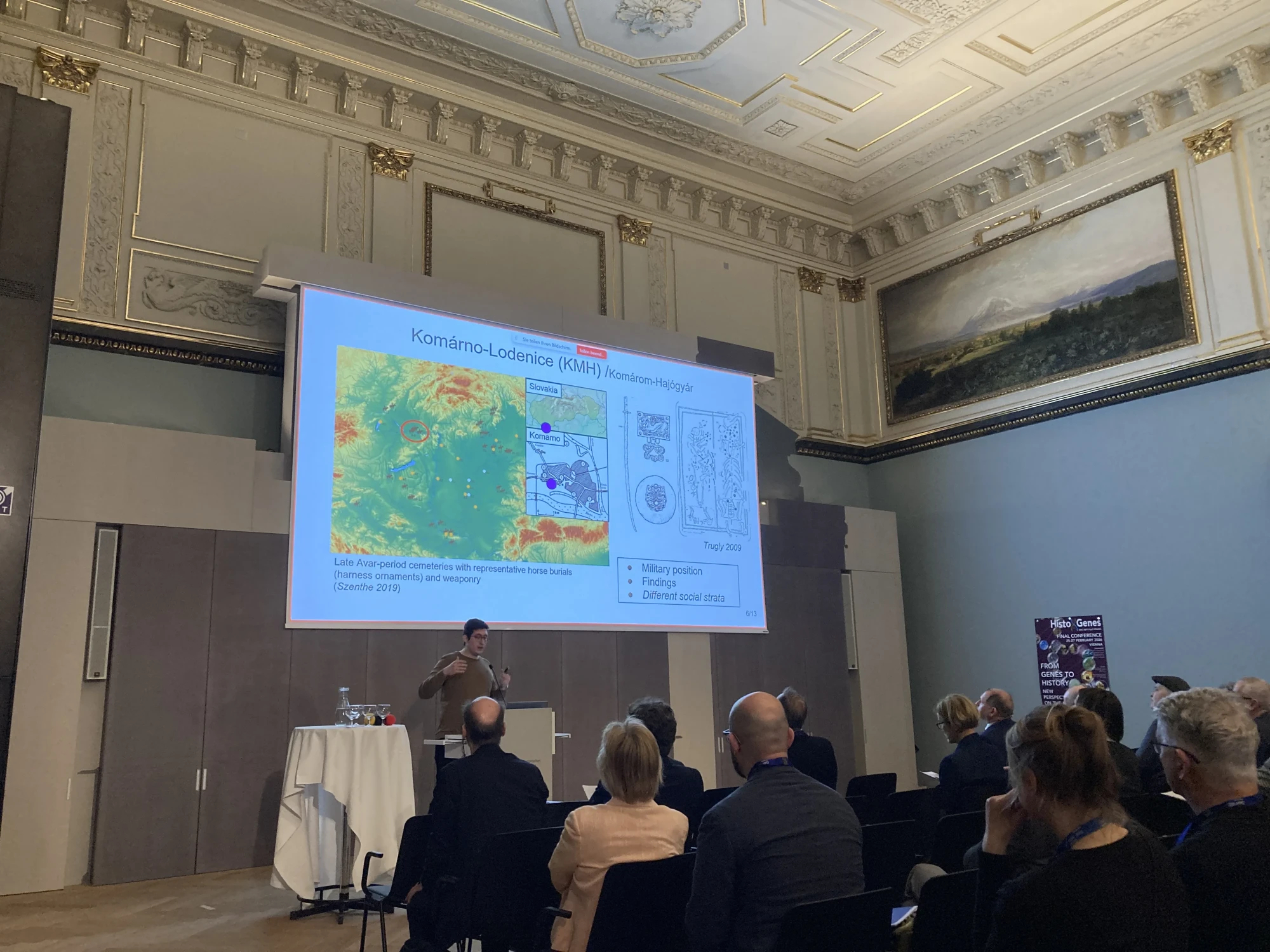
At the three-day conference summarising the results of the HistoGenes project, hosted by the Natural History Museum Vienna and the Austrian Academy of Sciences, the presentations focused on the main research questions of the project. Through a series of related case studies, team members presented findings on the interaction of the Late Antique population with migrants from the north, the influx of Asian steppe populations into the Carpathian Basin, the formation of communities observable through cemeteries of the Avar period, the spread of Slavs and the development of new central places of power in the 9th century.
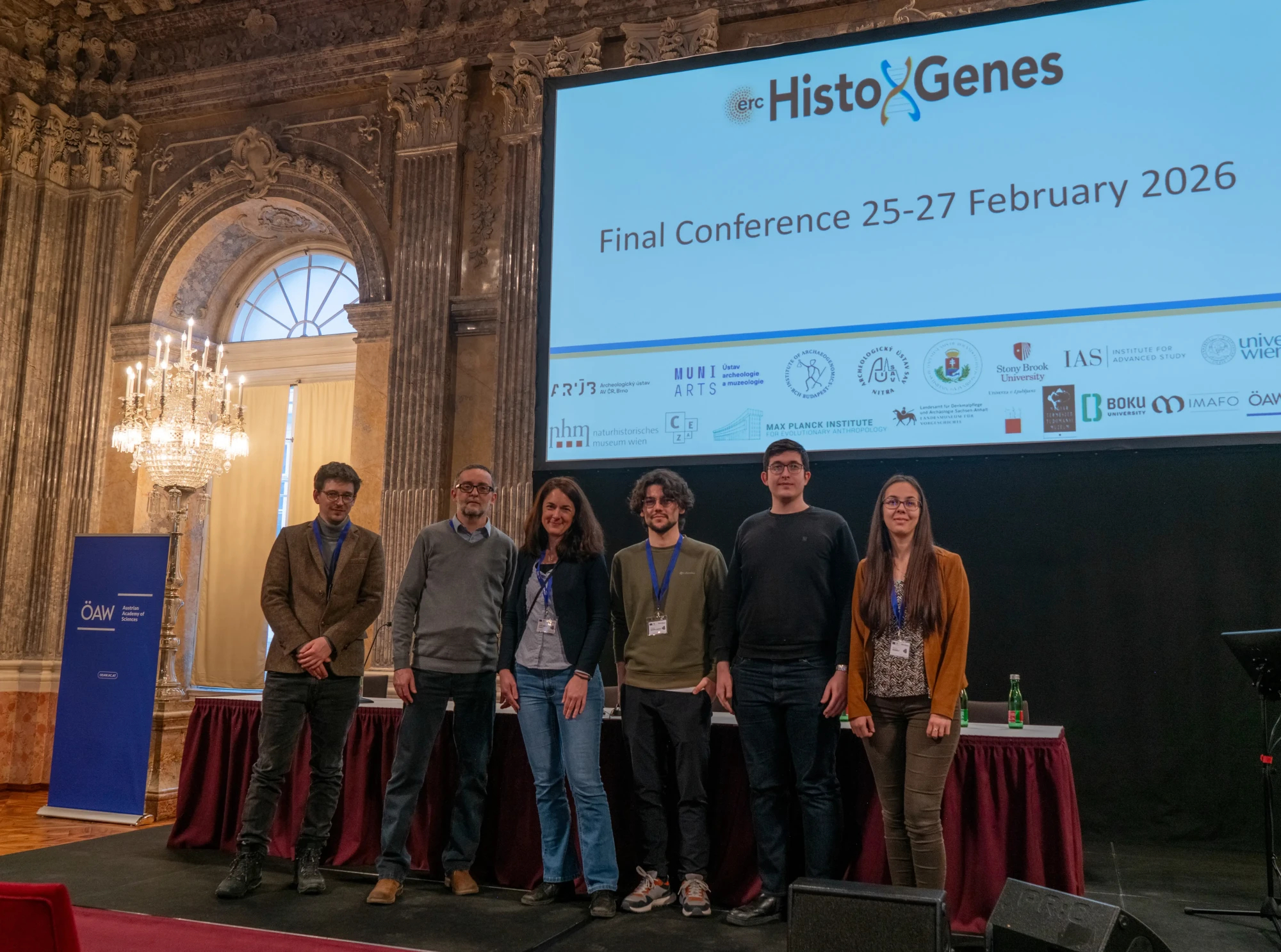
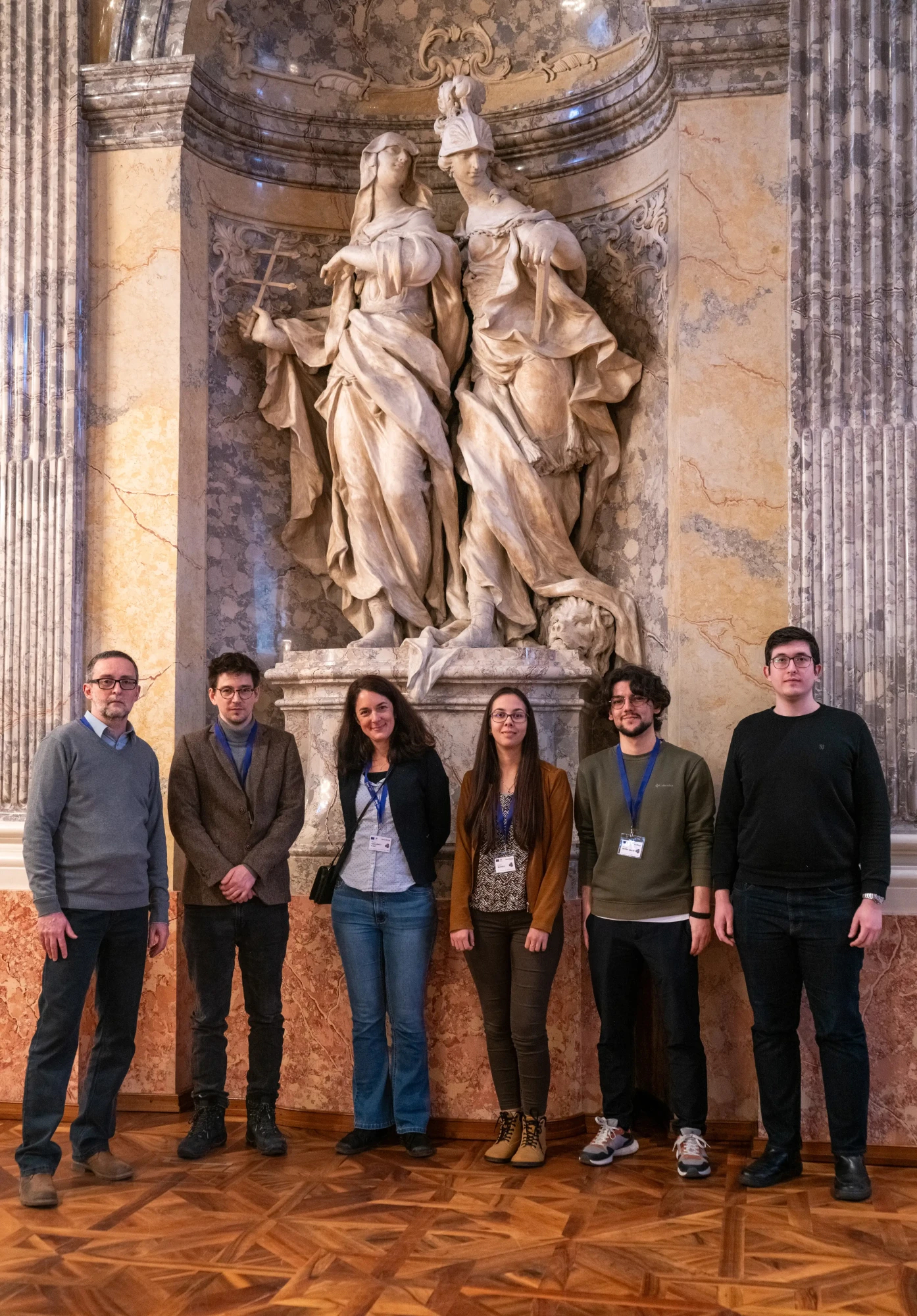
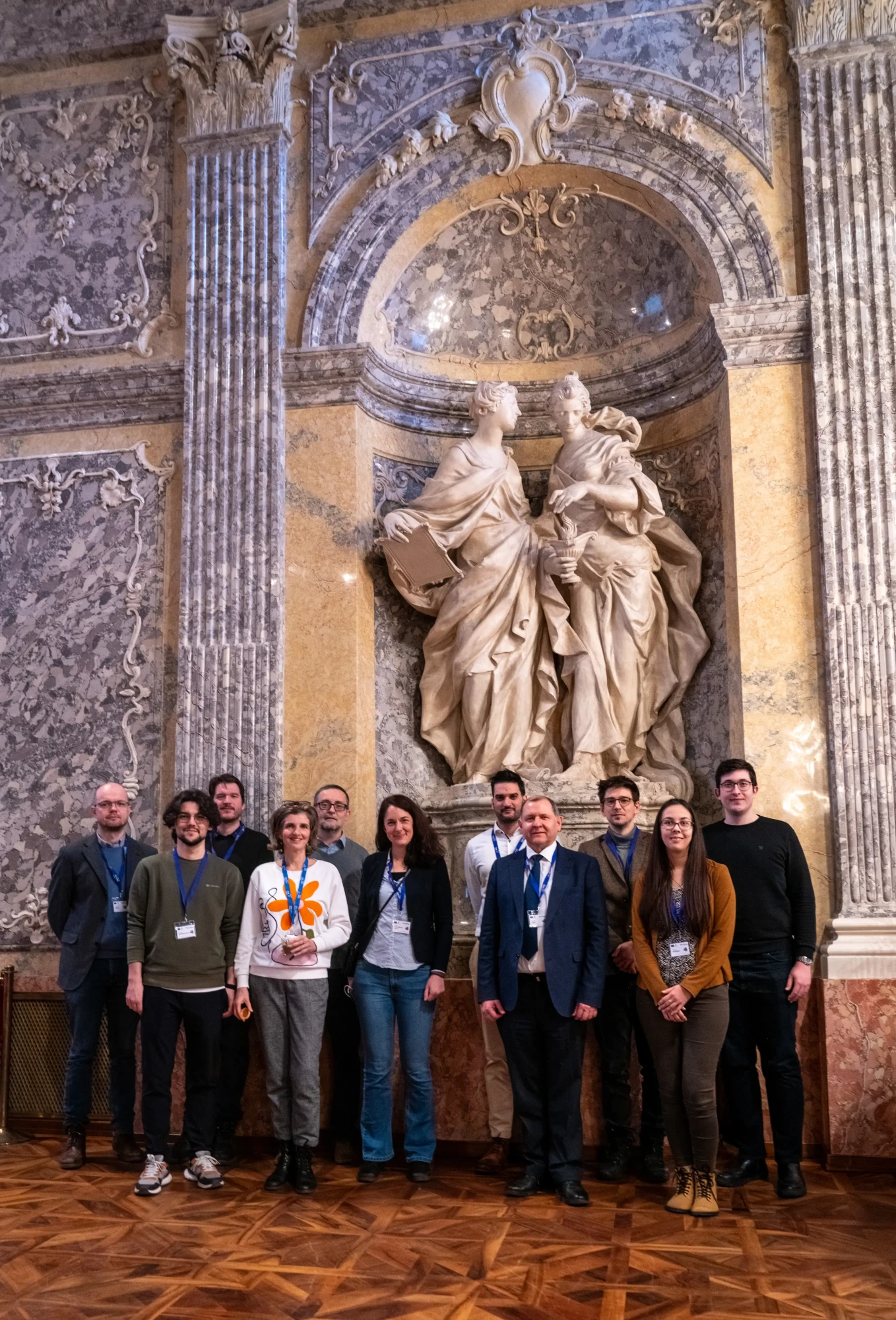
At the closing event, the Institute of Archaeogenomics ELTE RCH was represented by Balázs Gyuris, Balázs Mende, Anna Szécsényi-Nagy, Ahmet Bugra, Yusuf Can Özdemir, and Noémi Borbély (pictured from left to right in the first photo). They summarised their findings in the following four presentations:
- Balázs Gyuris: Community Formation and Social Relations in Avar-Period Southern Transdanubia (’Community Formation in the Avar Period’ section)
- Yusuf Can Özdemir: Komárom and Kiskundorozsma (’Community Formation in the Avar Period’ section)
- Balázs Gyuris & Sabine Eggers: Migration (’Comparative Approaches’ section)
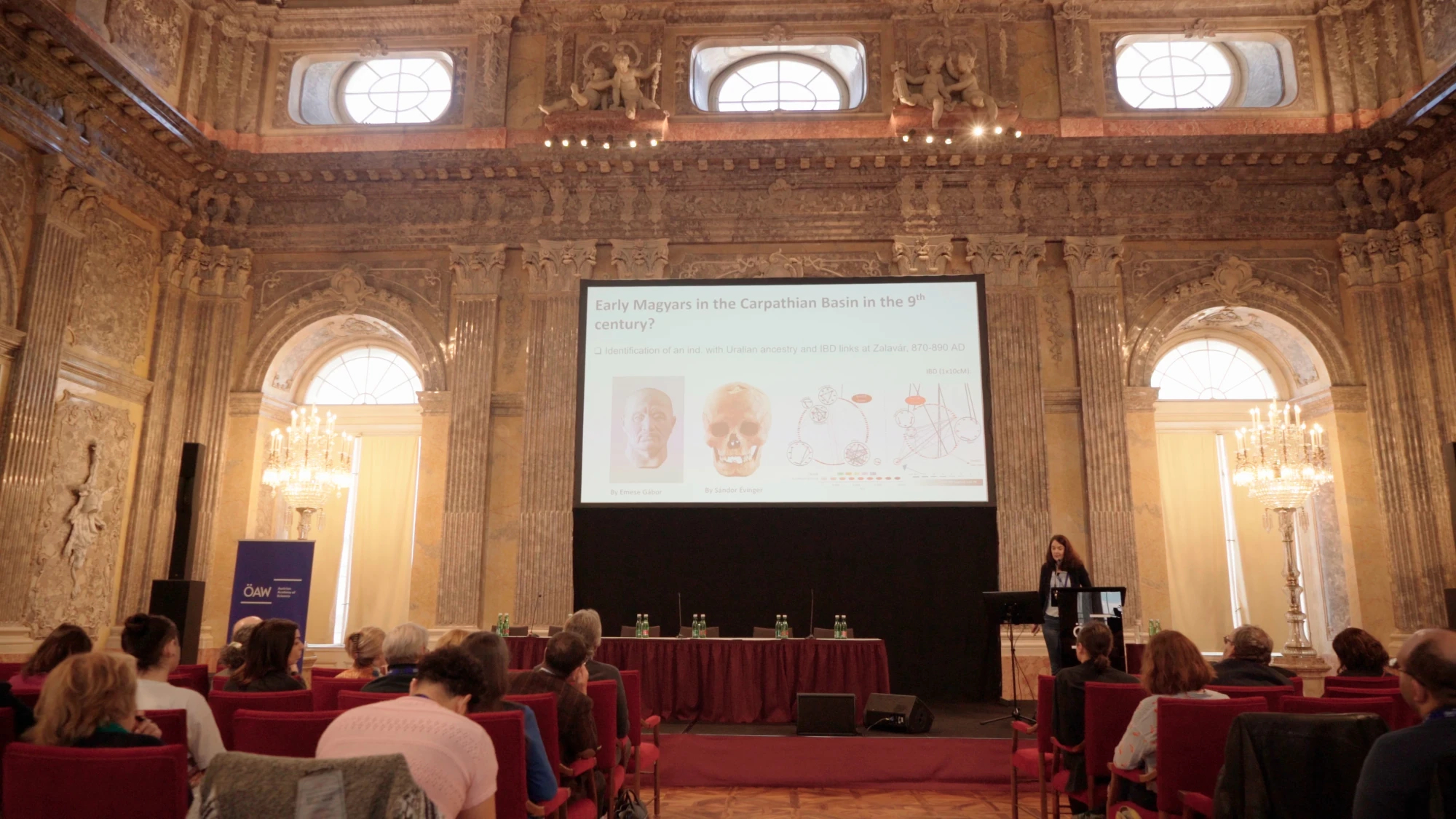
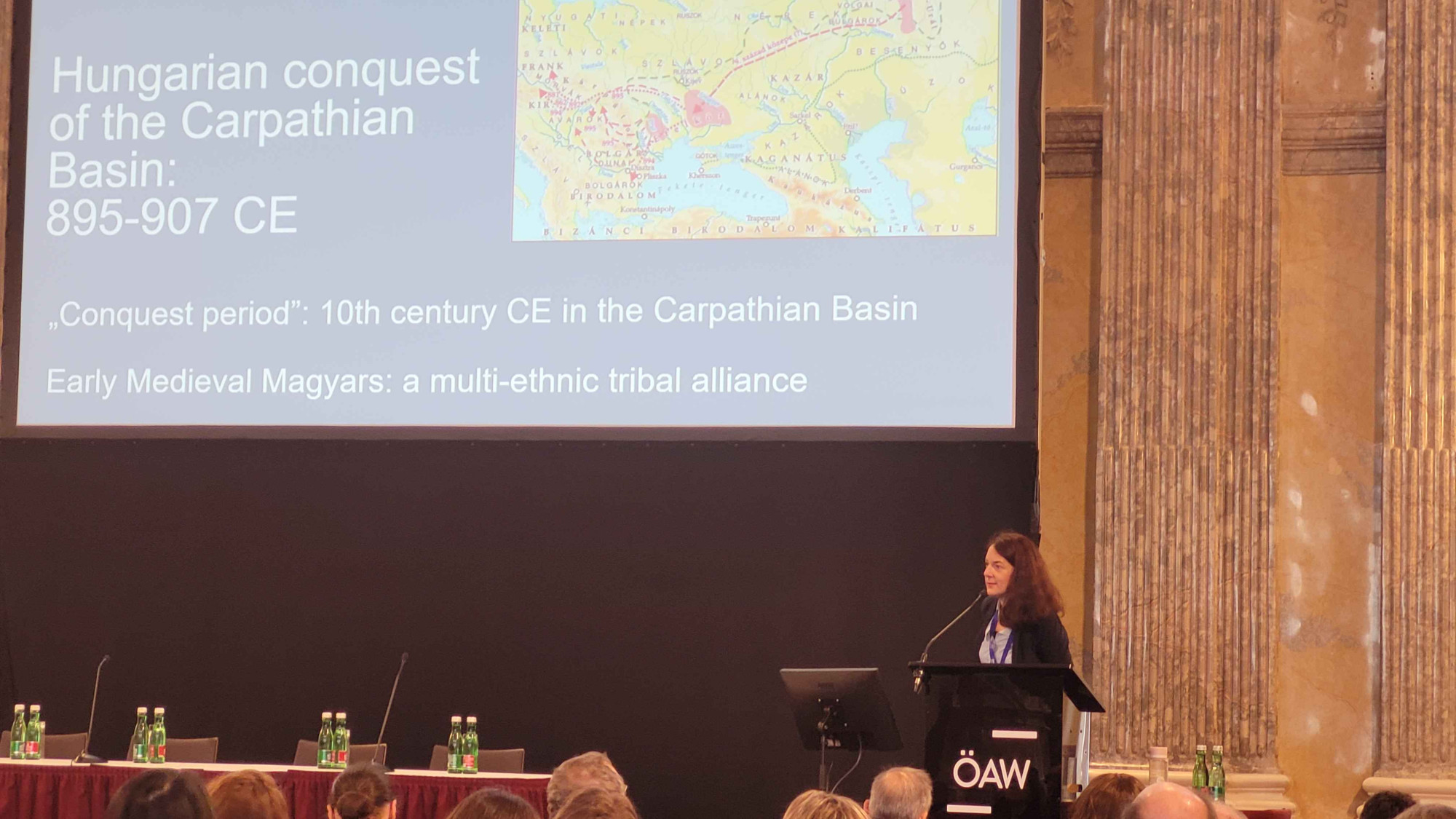
- Anna Szécsényi-Nagy: Eastern Central Europe after 900: New Archaeogenetic Results from Hungary (’Related Research’ section)